The Role of Vandex in Infrastructure Development: Bridges, Tunnels, and Beyond
Civil infrastructure fails slowly, then all at once. Water ingress, chloride attack, carbonation, freeze-thaw stress and hydrostatic pressure often begin as hidden problems inside concrete. Over time, they lead to cracking, corrosion of reinforcement, surface deterioration and costly repairs that disrupt service and shorten design life.
This matters to engineers, architects and project managers because durability is no longer a secondary design concern. It is central to safety and asset resilience.
Large-scale infrastructure operates under constant stress. Bridges face de-icing salts, traffic vibration, rain and thermal movement. Tunnels deal with groundwater seepage, hydrostatic pressure and limited access for repair. Across all asset types, the main challenge is the same: once moisture and contaminants enter concrete, deterioration accelerates.
That deterioration rarely comes from one source alone. Chloride exposure can drive reinforcement corrosion. Carbonation lowers concrete alkalinity and weakens steel protection. Freeze-thaw cycles expand trapped water and damage the surface. Chemical attack from sulphates, wastewater or marine exposure can further degrade the matrix. In these environments, high-performance protection systems are not optional. They are part of the structural strategy.
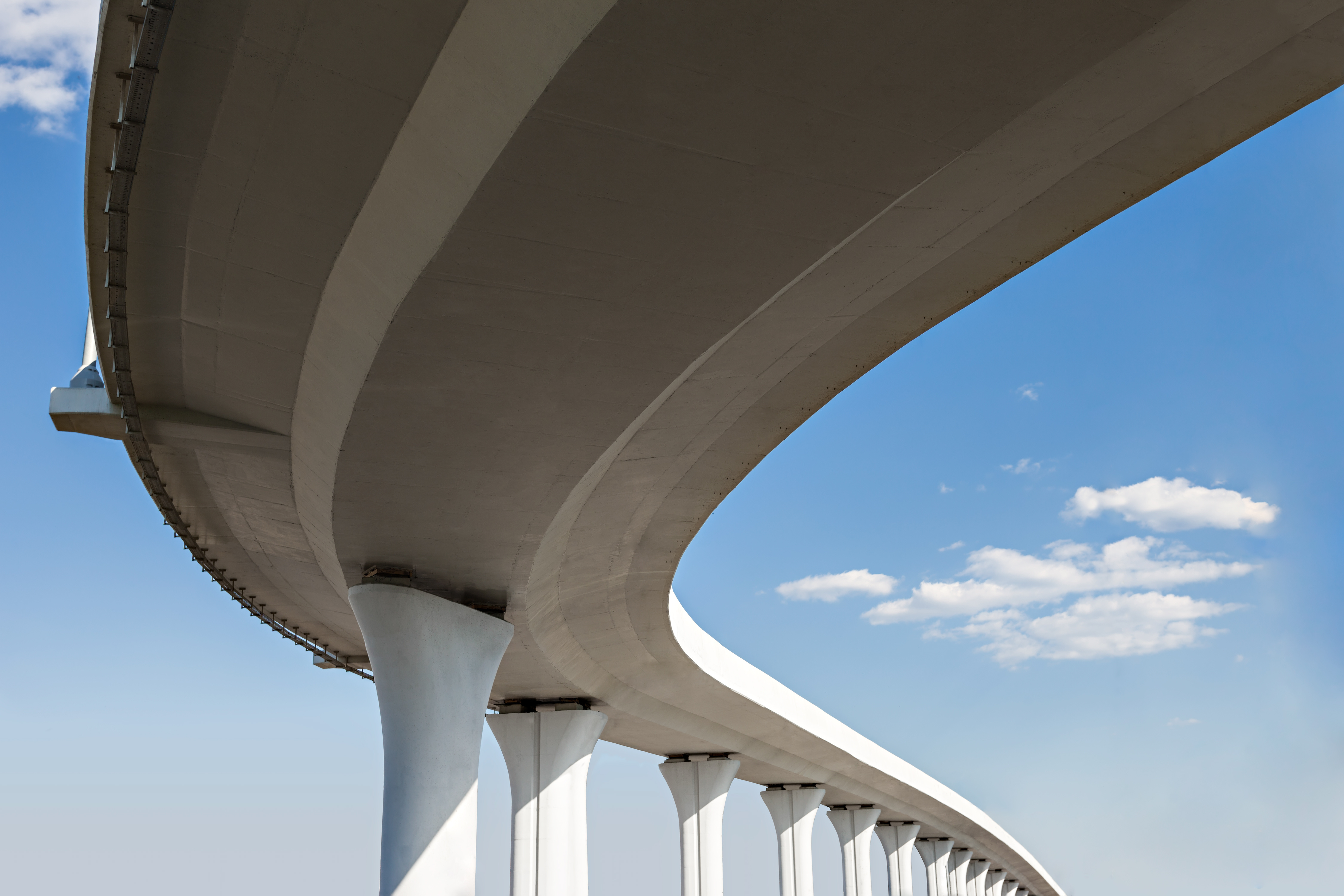
Bridges
Bridge structures are exposed on multiple fronts. Decks, abutments, piers, retaining elements and below-grade concrete all face water penetration, chloride-laden runoff, and seasonal weathering. If not controlled, those conditions can lead to spalling, corrosion and reduced load-bearing reliability over time.
Depending on the project conditions, selected Vandex products may assist in reducing water ingress through concrete and supporting durability where suitable cementitious waterproofing or concrete protection systems are required. On bridge decks and exposed concrete surfaces, protective coatings and cementitious treatments help limit chloride penetration and surface wear. On abutments, piers and below-grade elements, waterproofing systems help resist moisture migration from soil contact and standing water.
The practical value is clear:
If this sounds like a typical bridge maintenance challenge, the next step is to evaluate where permeability control will have the greatest impact.
Tunnels
Tunnels present a different but equally demanding environment. Tunnel linings, internal concrete surfaces, joints and other underground structures are often exposed to continuous seepage, aggressive groundwater and long-term saturation. Repair access is difficult, which makes early protection far more cost-effective than later intervention.
Vandex solutions are effective in tunnel applications because they work both at the surface and within the concrete. Crystalline waterproofing technology reacts with moisture and free lime in the concrete to form insoluble crystals within pores and capillaries. This blocks water pathways inside the matrix rather than only creating a surface film. That matters in underground structures where hydrostatic pressure can drive water deep into the substrate.
A common mistake is to rely only on superficial protection in high-moisture environments. The stronger approach is to combine internal pore blocking with durable surface protection, especially in areas exposed to seepage or chemically aggressive water. This helps protect tunnel linings, extend joint performance and reduce the risk of progressive deterioration.

Beyond the Basics
The role of Vandex extends beyond bridges and tunnels. Product selection should be based on the specific exposure conditions, including water pressure, substrate condition, chemical exposure and whether the application is on the positive or negative side. In marine structures, severe exposure to chlorides, tidal action and saltwater spray demands durable protection against corrosion and weathering.
These applications differ in use, but the performance goals are similar:
Key Benefits
For infrastructure owners and project teams, the benefits are not abstract. They directly affect performance, cost and risk.
1. Improved safety
Keeping water and contaminants out of concrete helps preserve structural integrity and reduce the risk of deterioration-related failure.
2. Lower maintenance and lifecycle costs
Protection applied early can reduce repair frequency, limit concrete rehabilitation needs and lower long-term asset expenditure.
3. Reduced downtime
When structures need fewer emergency interventions, owners avoid service disruptions, traffic impacts and operational losses.
4. Enhanced service life
When correctly selected and installed, Vandex systems may assist in supporting the long-term durability of concrete infrastructure by slowing the mechanisms that drive concrete decay.
5. Improved asset resilience
Protected structures are better able to withstand harsh environments, variable weather and long-term exposure to water and chemicals.
Modern infrastructure must do more than meet initial design requirements. It must endure decades of exposure, loading and environmental stress with minimal loss of performance. That is why high-performance waterproofing and concrete protection are a non-negotiable part of urban planning and infrastructure development.
Vandex systems support that goal by helping bridges, tunnels, dams, treatment facilities and marine structures resist the conditions that most often lead to premature deterioration. For project teams focused on durability, lifecycle value and dependable performance, the case is straightforward: protection must be built into the specification, not added after problems appear.
For your next infrastructure project, contact us today to identify the right Vandex solution for your structure.



 Waterproofing
Potable Water Applications: Why Vandex is the Industry Standard
Waterproofing
Potable Water Applications: Why Vandex is the Industry Standard
Potable water treatment and storage facilities are essential for public health and the delivery of safe, clean drinking water...
 Waterproofing
The Science Behind Crack Bridging: How Vandex Protects Your Structures
Waterproofing
The Science Behind Crack Bridging: How Vandex Protects Your Structures
Concrete is the backbone of modern construction. It’s strong, versatile and enduring. But even the best concrete has a weakness: it cracks..