
AI - How Artificial Intelligence is Impacting Construction in Australia
The construction industry across Australia is undergoing rapid change, driven by the adoption of artificial intelligence (AI). Traditionally, construction in Australia has faced challenges such as rising costs, labour shortages, and the pressure to adopt sustainable practices, especially in the wake of government commitments to net-zero targets. Now, forward-thinking companies are embracing AI to transform project planning, improve on-site safety, control costs, and advance green building initiatives, all while complying with local regulations and standards.

The Role of AI in Australian Construction
1. Smarter Project Planning Tailored for Australia
In Australia, project planning is uniquely affected by diverse climate zones, strict regulatory frameworks, and ongoing skills shortages. AI is helping contractors, from massive firms in Sydney to smaller builders in regional Queensland, overcome these hurdles.
For example, machine learning platforms analyse historical data from projects embarked on in different Australian states to predict windows of optimal construction activity, taking into account local weather patterns and compliance requirements. AI can flag scheduling risks by predicting heavy rainfall periods in Melbourne or heatwaves in Perth, allowing for contingency plans that minimise costly delay.
2. Enhancing Safety on Australian Construction Sites
Construction is Australia’s third most dangerous industry, with Safe Work Australia reporting hundreds of serious injuries each year. AI is helping to make job sites safer across the country.
Builders can now use computer vision AI through site cameras, such as those supplied by Australian tech firm Presien, to monitor worker activity for real-time safety risks. These systems automatically detect when PPE requirements (mandated under WHS law) aren’t met or identify hazardous behaviours, alerting site supervisors before incidents occur.
Wearable devices in construction are being used to monitor vital signs, fatigue levels, and environmental conditions. These devices can be integrated into personal protective equipment (PPE) like helmets and vests, providing real-time data to enhance safety and productivity on construction sites.
3. Cost Management and Productivity for the Local Market
Australia’s construction sector has one of the highest labour costs in the world, making efficiency critical. AI-powered cost management tools are being adopted by firms to address these challenges.
With AI, real-time data from ongoing sites, often spread over vast, remote areas, can be fed into project management platforms to track spending and identify potential overruns. AI algorithms can compare live material prices from Australian suppliers, recommend cost-efficient procurement options, and optimise logistics to address the “tyranny of distance” faced in remote regional builds.
4. Predictive Maintenance for Heavy Equipment
Australia’s mining sector and major infrastructure projects rely heavily on large fleets of machinery that must operate in challenging conditions. Unexpected breakdowns can halt progress and drive up costs.
AI-powered predictive maintenance, using data from IoT devices, is now mainstream among leading mining and construction contractors such as BHP and CPB Contractors. Sensors track machinery health and AI models predict component failures, critical for remote projects in the Pilbara or outback Queensland, where waiting for replacement parts could mean long, expensive delays.
Australian fleet managers are leveraging these tools to extend the lifespan of assets and ensure compliance with local safety regulations for plant and equipment.
5. Advancing Sustainable Building in Line with Australian Goals
With federal and state governments mandating stricter emissions standards and green building codes, the demand for sustainable construction has surged in Australia. AI is powering a new generation of eco-friendly projects.
For example, generative design software helps architects and builders in cities like Melbourne and Adelaide to create designs that maximise natural light, ventilation, and energy efficiency, key considerations in the NatHERS (Nationwide House Energy Rating Scheme) framework. Local projects such as the Atlassian Sydney Headquarters are harnessing AI-powered simulations to meet ambitious “net zero” building standards.
AI platforms also enable smart building management, adjusting HVAC and lighting according to building occupancy, slashing energy use and carbon footprint. Material procurement algorithms identify low-carbon options, supporting Green Star certification from the Green Building Council of Australia.

Local Challenges to AI Adoption
Despite rapid advancements, the uptake of AI in construction faces some unique Australian hurdles:
The Future of AI in Australian Construction
Looking ahead, AI is poised to play a defining role in meeting national targets for housing, infrastructure, and sustainability. The integration of digital twins (for real-time infrastructure management), robotics, and AI-driven compliance will make large-scale, complex projects, from Sydney Metro to renewable energy installations, more efficient and resilient.
As Australia’s leaders in construction continue to collaborate with tech firms and universities, AI’s influence will only accelerate. Expanding access to data, regulatory harmonisation, and targeted skills programs will ensure the sector capitalises fully on these emerging technologies.
Artificial intelligence is fast becoming a cornerstone of Australia’s construction sector transformation. From improving worker safety and reducing costs, to meeting sustainability goals in line with government policy, AI delivers tangible benefits today. For construction professionals, embracing AI offers a pathway to stay competitive, achieve compliance, and build the smarter, greener cities of tomorrow.



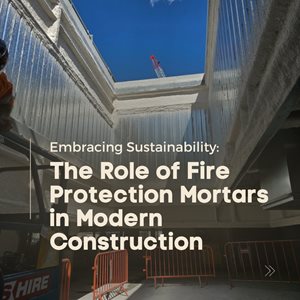 Fire Protection
Embracing Sustainability: The Role of Fire Protection Mortars in Modern Construction
Fire Protection
Embracing Sustainability: The Role of Fire Protection Mortars in Modern Construction
Fire protection mortars are primarily used to provide fire resistance to various structural elements such as steel beams, columns, and concrete upgrades...
 Waterproofing, Hot Topics
Can High-Rise Living Help Solve Australia’s Housing Crisis?
Waterproofing, Hot Topics
Can High-Rise Living Help Solve Australia’s Housing Crisis?
Australia is in the middle of a housing crunch. Vacancy rates are at historic lows, rents keep climbing, and home ownership feels out of reach for many families...